The Other Side of the Mountain
For the past seven months, we’ve examined more than a century of stock market history. We’ve studied five devastating declines, identified patterns they shared, and discovered how long-term rising trends eventually give way to significant losses. And along the way, we’ve learned something important:
The stock market doesn’t always move in the same direction. Why, then, should our investment strategy always remain the same?
That question brings us to the final installment of this series. Recognizing changes in market trends is only half the equation. What we do with that knowledge may determine how much wealth we preserve–and how much we have available to buy stocks at lower prices when the next opportunity arrives.
To illustrate this concept, I’d like you to consider a familiar image from a different perspective.
Every Mountain Has a Summit

Imagine the stock market’s long-term advance as a mountain. As we climb, our investments generally increase in value. The higher we go, the more wealth we accumulate. And with each passing year, it’s easy to become increasingly comfortable with the climb.
But every mountain has a summit.
We may not recognize the summit when we reach it. In fact, we may not recognize it until we’ve already begun descending the other side. This is where the lessons from our previous articles become so important.
History has shown that major market declines often develop after long-term rising trends begin to weaken. And while no indicator can identify every market top, the relationship between stock prices and their Blue Line can provide valuable evidence that conditions may be changing.
The objective isn’t to predict the exact top. It’s to recognize when the evidence suggests the climb may be coming to an end.
For most investors, what follows is familiar. As stock prices decline, so do their investment values. Years of accumulated gains can disappear, leaving investors waiting years simply to recover. But what if a declining market didn’t have to mean watching all your investments decline with it?
A Different Perspective

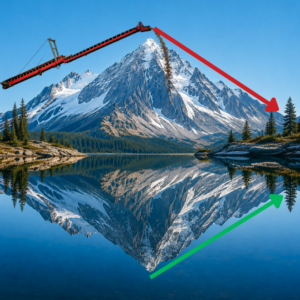
Look closely at the mountain and its reflection in the water. Above the waterline, the mountain rises toward its summit. Below the waterline, its reflection extends in the opposite direction. It’s the same mountain, viewed from two different perspectives.
Now imagine the mountain represents the stock market. The red arrow illustrates declining stock prices after the peak. But notice the green arrow in the reflection. It represents investments that may actually rise in value as stock prices fall.
What if a declining stock market could also create opportunities to preserve–and potentially increase–a portion of your wealth?
That possibility is an important part of the philosophy behind BLUE LINE INVESTINGÒ. Our process seeks to recognize changing market trends and adjust portions of a portfolio accordingly.
During rising trends, the objective is to participate in the advance. When conditions begin to change, the objective shifts toward limiting losses while seeking opportunities that may benefit from declining prices.
In other words, a declining market doesn’t necessarily mean every investment in your portfolio must decline with it.
The Opportunity Beyond the Decline
There is another important benefit to consider. When substantial wealth is lost, time is often lost with it.
Consider an investor whose portfolio declines 50%. That investor must earn 100% simply to recover the original investment value–a process that could take years.
Now consider an investor whose strategy successfully limits a substantial portion of that decline. Not only might that investor preserve more wealth, but they may also have more capital available when the next rising market begins.
But what good are the opportunities created by declining markets if so much of your wealth has already been lost?
That is why managing risk is so important. The objective isn’t simply to limit losses. It’s to preserve more of our wealth so we have more capital available to invest when stock prices become attractive again. That distinction becomes especially meaningful as we approach or enter retirement, when recovering from significant losses can become increasingly difficult.
The Most Important Lesson
For eight months, we’ve examined how wealth can be created during long-term market advances–and how quickly it can disappear when those trends reverse. But perhaps the most important lesson isn’t simply recognizing these patterns.
It’s what we choose to do with that knowledge.
Rising markets create opportunities to build wealth. Declining markets can create opportunities of their own–if we’re prepared to recognize and respond to them.
Our objective isn’t to predict the future or eliminate every investment loss. It’s to participate in favorable trends, adapt when conditions change, and strive to preserve more of the wealth our investments have created.
Because successful investing isn’t simply about how much money we make during the good years.
It’s about how much we keep–and what that preserved wealth makes possible in the years ahead.
There is a time to keep. And there is a time to discard.
Recognizing the difference may change the way you invest for the rest of your life.
Remember the mountain and its reflection? A memorable scene from Top Gun: Maverick brings that concept to life–and illustrates why a declining market doesn’t necessarily have to mean declining opportunities.
Where We Stand as of Month’s End
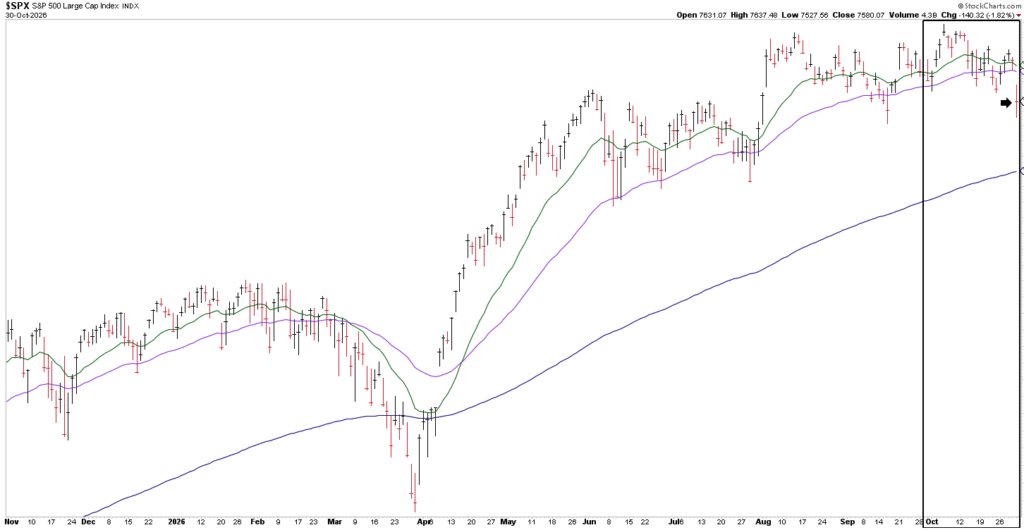
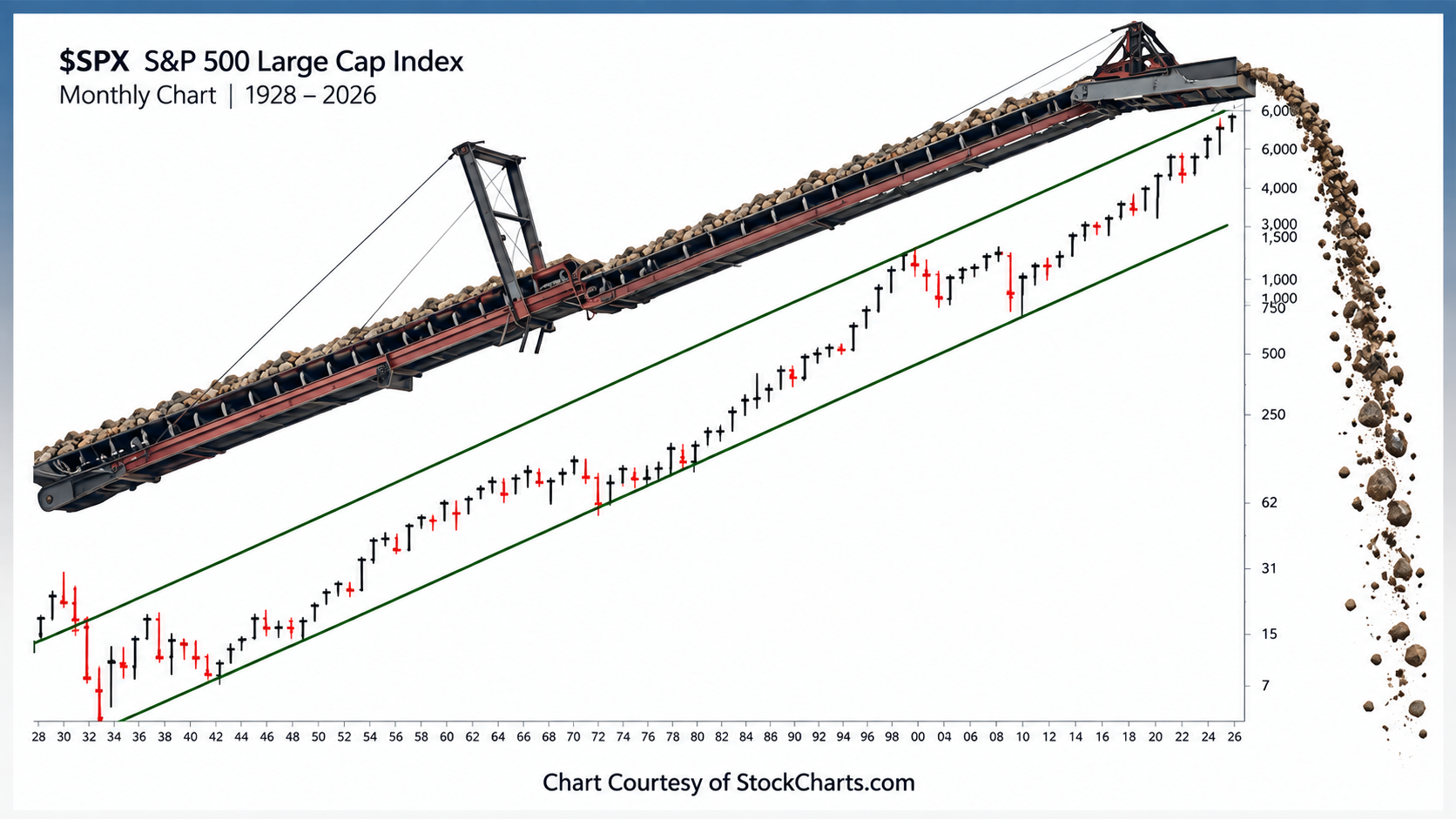
Chart courtesy of StockCharts.com, Data as of 10/31/26
As of the end of October:
- The S&P 500 finished the month 3.2% above the Blue Line
- One month earlier, it stood 5.4% above the Blue Line
Markets will always fluctuate. Headlines will always compete for your attention. Our responsibility is to look beyond the emotion, study the evidence, and make disciplined investment decisions based on historical market trends.
To our clients, thank you for trusting us to be your advocate. If you’re not yet a client, we’d welcome the opportunity to show you how our disciplined investment process seeks to help investors participate in long-term market growth while working to protect against life-changing losses.
Participate. Protect. Prosper.
Jeff Link
Founder
(833) 258-2583
Disclaimers:
The BLUE LINE INVESTING® (BLI) investment process was founded on over 95 years of stock market history. It seeks to identify and align investment decisions with multiyear trends. Various aspects of this process have been illustrated in my book Protecting The Pig: How Stock Market Trends Reveal the Way to Grow and Preserve Your Wealth.
The S&P 500 Index is one of the most commonly followed equity indices, and many consider it one of the best representations of the U.S. stock market, and a bellwether for the U.S. economy. It is comprised of 500 large companies having common stock listed on the NYSE or NASDAQ. The volatility (beta) of the account may be greater or less than the index. It is not possible to invest directly in this index.
Technical analysis is a method of evaluating securities by analyzing statistics generated by market activity, such as past prices and volumes. Technical analysis attempts to predict a future stock price or direction based on market trends. The assumption is that the market follows discernible patterns and if these patterns can be identified then a prediction can be made. The risk is that markets may not always follow patterns. There are certain limitations to technical analysis research, such as the calculation results being impacted by changes in security price during periods of market volatility. Technical analysis is one of many indicators that may be used to analyze market data for investing purposes and should not be considered a guaranteed prediction of market activity. The opinions expressed are those of BLI. The opinions referenced are as of the date of publication and are subject to change without notice. BLI reserves the right to modify its current investment strategies based on changing market dynamics or client needs.
Past performance is not indicative of future results. This material is not financial advice or an offer to sell any product. The information contained herein should not be considered a recommendation to purchase or sell any particular security. Forward-looking statements cannot be guaranteed.
Investment advisory services offered through Guardian Wealth Advisors, LLC D/B/A Blue Line Investing. Guardian Wealth Advisors, LLC (“GWA”) is an investment adviser registered with the U.S. Securities and Exchange Commission. Registration does not imply a certain level of skill or training. More information about GWA’s investment advisory services can be found in its Form CRS or Form ADV Part 2, which is available upon request.
GWA-26-94